5 Things Rust Cheats Actually Change In A Server Raid
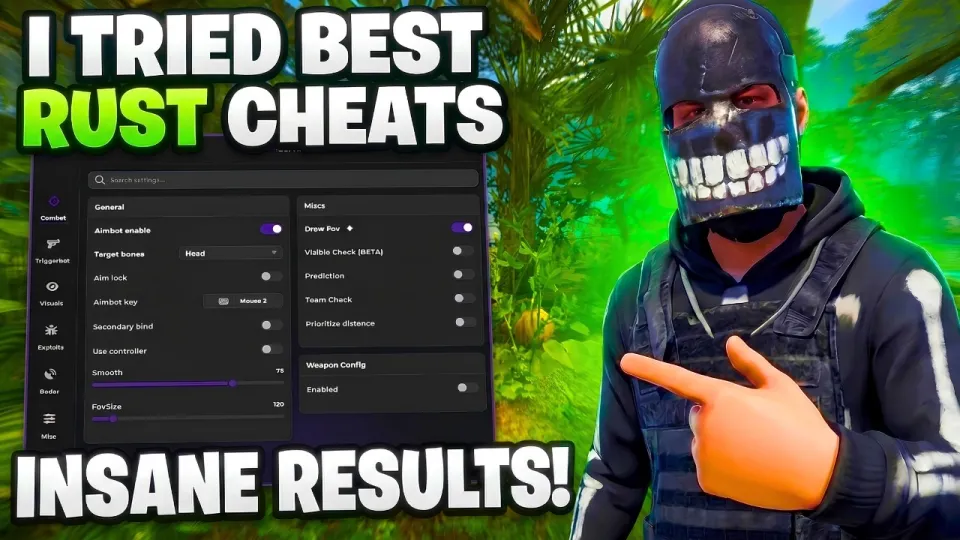
Video: I Secretly Used Rust Cheat To Dominate Everyone In The Server...(INSANE)
Key takeaways
- Rust cheats are third-party overlays that read and modify game memory to expose hidden information and automate aim.
- The showcased product is the ZALIANT Private Rust Cheat, sold through zaliantservices.com with a Discord community.
- Core feature groups are ESP/wallhack, aimbot, recoil and weapon scripts, and a configurable cheat menu.
- Rust runs Easy Anti-Cheat plus server-side and manual moderation, so no cheat is permanently undetected.
- Private, paid cheat builds are usually updated faster after game patches than free public ones.
Rust cheats are third-party programs that hook into the game client to reveal information the game hides (players through walls, loot, stash contents) and to automate aiming and recoil control. They are sold as paid subscriptions or private builds, injected before or during a session, and configured through an in-game overlay menu. The private build shown in the breakdown is the ZALIANT Private Rust Cheat, which ships with an ESP suite, an aimbot module and a settings panel for tuning both.
What a Rust cheat menu actually contains
A modern cheat menu is organized into tabs, and the layout is roughly the same across paid products. The ESP tab controls what is drawn on screen: player boxes, skeletons, names, distance readouts, health and team indicators, plus world objects such as crates, sulfur nodes, vehicles, sleeping bags and tool cupboards. The aimbot tab handles target selection — field of view, smoothing, hitbox priority (head, chest, nearest bone), visibility checks and a toggle key. A third tab usually covers weapon behavior: no recoil, no sway, instant hit registration tweaks and projectile drop compensation.
The remaining tabs are housekeeping: a config system for saving and loading profiles, a color and font editor for the overlay, stream-proof settings that hide the overlay from capture software, and hotkey bindings. In the video the menu walkthrough is compressed into the opening seconds, which is typical — most of the configuration is a handful of sliders and checkboxes rather than a deep settings tree.
The four feature groups that matter in a raid
Raiding is where cheat features diverge most from ordinary PvP, because information beats aim. The four groups below cover what changes during a raid specifically.
- ESP and wallhack. Knowing which base has players online, where the tool cupboard sits and whether a defender is holding an angle removes the scouting phase almost entirely. Loot ESP also flags boxes and stashes that a normal player would walk past.
- Aimbot with visibility checks. A silent or smoothing-based aimbot locks to a target only when line of sight exists, which is what separates a usable configuration from one that snaps through walls and looks obviously wrong on a recording.
- Recoil and spray control. Rust's recoil patterns are learnable but punishing; a no-recoil script flattens the AK and LR-300 spray into a straight line, which is the single most detectable behavioral change if used carelessly at long range.
- Movement and utility scripts. Auto-jump, fast loot, instant craft and similar helpers save minutes per session but generate unnatural input patterns that server-side statistics can flag.
How the cheat is set up before a session
Setup follows a fixed order, and skipping steps is the usual cause of a ban or a crash. The general sequence for a private Rust cheat looks like this:
- Disable or exclude the cheat loader in Windows Defender and any third-party antivirus, since memory-reading tools are flagged by signature, not by behavior.
- Launch the loader first, authenticate with the license key, then start Rust through Steam so the injection happens on the correct process.
- Load a saved config before joining a server — changing settings mid-fight is slower and riskier than loading a profile.
- Test the overlay in a staging area or a low-population server before committing to a wipe-day session.
- Re-download the loader after every Rust patch; a stale build is the most common reason a menu fails to open.
Paid products typically push updates within hours of a forced game update, which is the practical difference between a private subscription and a free public release that dies after each patch.
Detection risk and what anti-cheat looks at
Rust uses Easy Anti-Cheat on the client plus server-side detection and manual moderation, and no commercial cheat is permanently undetected. Client-side anti-cheat looks for known signatures, suspicious handles and injected modules; server-side systems look at behavior over time — headshot ratio, reaction time, spray accuracy at distance, movement anomalies and reports from other players. A cheat that passes the first layer can still fail the second.
Practical risk factors that matter more than the menu itself:
- Obvious settings. Snapping to heads through smoke or at 200 meters produces clips that get posted to community forums within hours.
- Account age and inventory. Bans are tied to the Steam account and, in Rust, to the game ban flag that follows it; a cheap alt account limits the loss but not the hardware and IP signals.
- Server type. Official servers run the strictest moderation; community servers vary wildly, and some run their own custom checks.
- Time since patch. The days right after a forced update are when outdated builds are most exposed.
Anyone weighing the trade-off should treat a ban as a matter of when, not if, and factor the cost of a replacement copy of Rust plus a new account into the subscription price.
Where to buy and what the listing includes
The product featured in the breakdown is sold directly through the vendor rather than a reseller: the ZALIANT store lists the Private Rust Cheat alongside other titles, and buyers get access to the vendor's Discord community for license support, config sharing and patch announcements. A private listing of this kind normally includes the loader, a license key tied to a subscription period, the ESP and aimbot modules in one package, and config profiles.
Before paying, check three things: whether the license is time-limited or lifetime, whether HWID resets are included if you change hardware, and how fast the vendor has historically shipped updates after a Rust patch. Those three details separate a usable subscription from a dead key two weeks after purchase.
Conclusion
Rust cheats bundle ESP, aimbot, recoil control and utility scripts into one overlay menu, and the practical difference between products comes down to update speed, config depth and how gracefully the features can be toned down. The ZALIANT Private Rust Cheat shown here is a representative example of the paid private tier — menu-driven, config-based and priced as a subscription. The video breakdown by the channel yqzkqrv walks through the menu and gameplay in a few minutes, which is enough to see the feature set but not enough to judge long-term stability. If you decide to try it, start from the product page, read the license terms, and assume the account you use it on is expendable.
Source: I Secretly Used Rust Cheat To Dominate Everyone In The Server...(INSANE) · Markdown version
Questions & answers
Are Rust cheats undetected?
No cheat is permanently undetected. Rust runs Easy Anti-Cheat on the client plus server-side behavioral detection and manual moderation, so a build that survives one patch can be flagged after the next. Private paid builds usually get updated faster than free public ones, which shortens the window of exposure but does not close it.
What features do most Rust cheats include?
The standard package is ESP or wallhack (player boxes, skeletons, loot and stash markers), an aimbot with field-of-view and smoothing controls, recoil and spray scripts, and utility options like auto-jump or fast loot. All of it is managed from an overlay menu with saveable config profiles.
How much do Rust cheats cost?
Pricing depends on the vendor and the license length; private builds are sold as time-limited or lifetime subscriptions and are usually more expensive than public releases. Add the cost of a replacement Rust account to the budget, since a ban consumes the account the cheat was used on.
Can you get banned for using a Rust cheat?
Yes. Bans are issued to the Steam account and carry a game ban flag, and hardware or IP signals can link related accounts. Obvious settings such as snapping to heads at long range generate reports and clips that speed up manual review.